
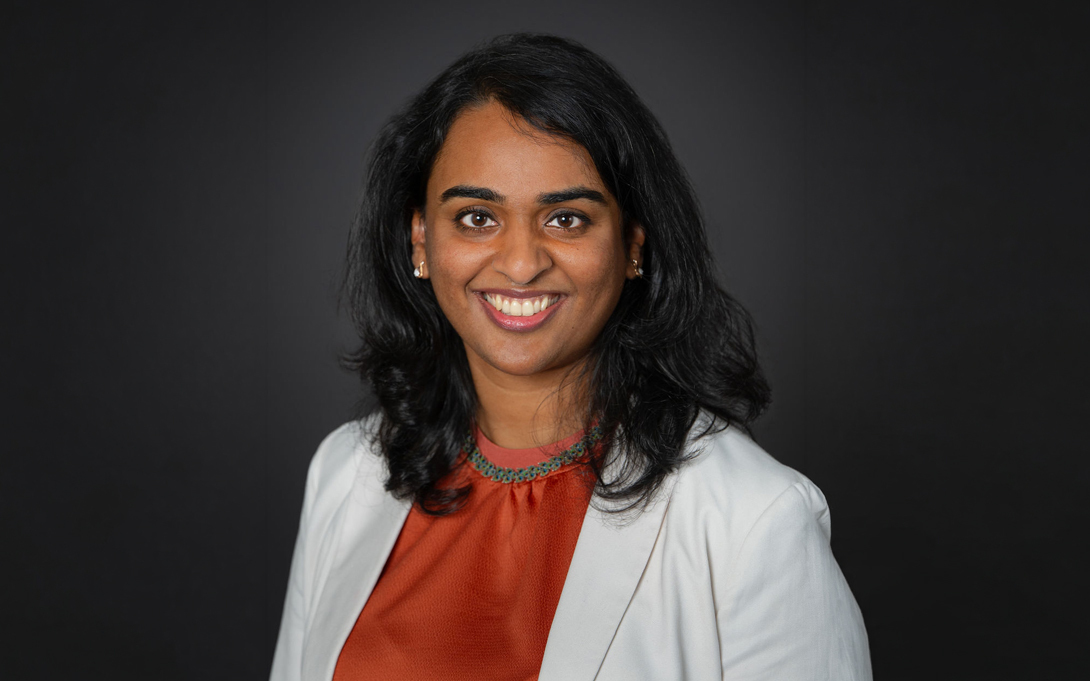
Divya Ramesh completed her PhD in Computer Science and Engineering and a certificate in Science, Technology, and Public Policy from the University of Michigan, Ann Arbor in 2025. Ramesh recently took a position at the University of North Carolina at Charlotte as an Assistant Professor of Human-Centered Computing and Education. Professor Ramesh recently answered some questions for STPP.
How has your work and career been influenced by your experience at STPP? How did you decide to get an STPP certificate?
I was always intrigued by the activities, classes, and events at the Ford school. My dissertation research was on the social impacts of AI, and it had implications for public policy. A case study I did as a part of it shaped policy conversations in India and the United States. While this was definitely exciting, it happened by chance completely. I knew we needed more public policy solutions to address the adverse impacts of AI, but I had no tools to get started. This is when I started looking into STPP (in my 5th year!). I took 510 with Shobita Parthasarathy first, and I loved it. I then decided to take 650. I had already taken a course earlier in my PhD that I could double count as an elective. So I figured I'd take a final course and complete the certificate. I'm so glad I did! It gave me such unique perspectives that I think it shaped my career path significantly.
After STPP, I had Shobita on my dissertation committee where she helped me think about my research very differently; I went on to do a policy fellowship at the National Academies. I was truly able to own my Computing + Policy expertise that our world badly needs today.
What is the most fulfilling or interesting project you've worked on up to this point in your career?
With respect to STPP, the project with the Community Partnerships Initiative, led by Molly and Kristin, was really meaningful. It was the first time I experienced first-hand how to build equitable partnerships with community organizations, how to lead with compassion, how to truly work collaboratively, how to truly draw on community expertise, create artifacts that are meaningful for everyday publics, so many things! Technical folks like me don't necessarily think about building relationships as an integral part of research. This project changed my views on relationships with community completely. I learned the importance of value alignment— something that I've learned to recognize and prioritize in all of my collaborations going forward.
What did the path to your current role look like?
I'm currently an Assistant Professor in Human-Centered Computing and Education at the University of North Carolina at Charlotte. I started this role right after my PhD. However, I spent some time at the National Academies as a policy fellow during the last year of my PhD, which was also something my STPP experience contributed to. This experience helped me understand the kind of science policy work that I want to be doing going forward.
What does your work look like today, and what are your professional plans going forward?
I currently lead an interdisciplinary research group where we're starting to envision an alternate world where we critically think about the kinds of technologies and interventions we build. Currently, we are thinking about what it means to truly bring about economic inclusion to low-income communities, leveraging technical solutions such as AI, but also thinking holistically, and bringing public policy solutions. I'm hoping that this group expands to a collective in the future, where we show what an alternative, ecological model of building technology that truly prioritizes the needs of communities can look like.
Anything else you'd like to add?
If anyone is wondering about the STPP program or certificate, I'd say definitely give it a try! I've met so many interesting people through the program who helped me widen my world views. STPP and the Ford school are definitely one of my top experiences at Michigan. Go Blue!