
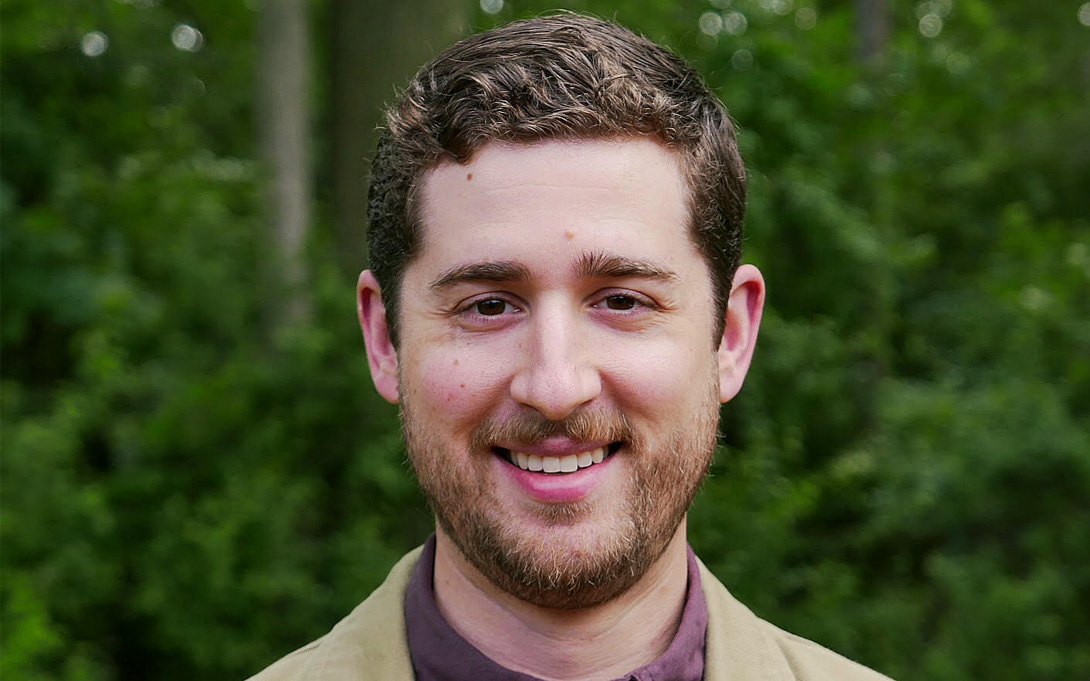
STPP alum Tyler Baird is the analyst in Michigan Department of Rural Development's (MDARD's) Office of Agricultural Science and Research (OASR), where he supports departmental policies and programs with research analysis focusing on climate change resilience, emerging contaminants, and agricultural nutrient pollution. In May 2025, he completed master's degrees at University of Michigan School for Environment and Sustainability (SEAS) and the Gerald R. Ford School of Public Policy, where he led a team conducting farm management research in the Western Lake Erie Basin (WLEB) and served as Editor-in-Chief for the Michigan Journal of Public Affairs. Prior to graduate school, Tyler served over a decade in the United States Air Force as an airborne cryptologic language analyst. His recent works on U.S. agricultural policy and sustainability leadership have been published in the Michigan Journal of Public Affairs and in an edited book, Global Leadership for a Sustainable Future (Emerald Publishing, 2025).
1) Can you please give an overview of your career path and the high points and challenges along the way?
My career has taken a few twists and turns — buckle up! I enlisted in the United States Air Force fresh out of high school, where I spent ten years as an airborne language analyst. My service involved foreign language acquisition and employment, lots of analysis and leadership experience, about two thousand flying hours in EUCOM and CENTCOM theaters, living abroad, and many other interesting (and sometimes harrowing) experiences. While I always held a strong desire to pursue higher education, I didn’t get started on my remote bachelor’s degree in environmental science until I was 25 years old. Over the course of that degree program, my framing of global issues broadened from conflict and security to the impacts of climate change, and I became determined to make a career transition. Leaving my career in the military was a huge personal challenge – I was a leader and a skilled technician, I was halfway to a pension, and all my friends were also in the military. However, I was also extremely burned out, and an intense personal event led me to examine, possibly for the first time, what I actually wanted out of my career. After separating, I worked as a civilian contractor full time and went to school online full time for two years, during which my first daughter was born. Those were grueling years, but I persevered to earn my degree at nearly 31 years old, and I promptly applied to graduate schools. A symbolic moment came in February 2022, when I received my first acceptance letter to the University of Michigan. I picked up a celebratory bottle of champagne on my way home from work, and my wife and I were toasting to a new future when I received a notification that Ukraine had been invaded by Russian forces – my former area of expertise. Needless to say, my decision to stay the course was not a light one, and I carry that sense of intention in my work every day.
During graduate school, I had too many amazing opportunities to list (including the arrival of our second daughter). I became increasingly interested in climate change policy in the agricultural sector and the roles that states and regional coalitions play in national decision-making. I led research on behalf of MDARD’s WLEB Specialist to assess adoption of agricultural practices in priority regions of Michigan, and I interned for a year with Michigan Dept. of Environment, Great Lakes, and Energy’s (EGLE’s) Office of the Great Lakes (OGL). Additionally, I conducted smaller research projects and independent studies at SEAS and the Ford School, all of which bolstered my interest and enthusiasm for equitable policy levers in the fight against climate change. I was hired by MDARD in June 2025, due largely to a research project I designed and conducted at EGLE, my prior agricultural research experience, and my familiarity with Michigan’s agricultural sector.
2) How did your work with STPP add to your professional development and interests? What projects did you work on and/or writing did you do for STPP?
STPP has been so important in my framing of science and research for the public good. My work with Dr. Parthasarathy dealt primarily with agricultural tech innovation’s historical impacts on environment, climate, and labor economics. These are, generally, the key inputs to industrial agriculture: mechanized labor and synthetic chemical additives (fertilizers and pesticides). I worked on projects analyzing the role of technology in the pre- and postwar federal policy history around land consolidation and monoculture cropping systems which enabled the U.S.’s global hegemony via Cold War-style grain diplomacy. My interests in environmental sustainability and climate change resilience drive me to embrace the STPP lens and empower me to question the notion of a values-agnostic approach to technology development, in this case regarding agricultural production. Using an STPP framework, I was able to conceptualize and study alternatives to industrial agriculture and explore questions about what the public is truly gaining from our high-tech agricultural production. The STPP experience has been critical in my current role with MDARD; I am often in conversations and professional contexts where I can raise important clarifying questions around values, intentions, and the public good.
3) What advice do you have for early career STPP graduates and/or those interested in public service?
As an early-career graduate myself, I would first recommend getting comfortable with being the lone voice for values in a room of advocates for prima facie technological solutions and innovation. It can be an uncomfortable position, made worse in organizations with strong hierarchies or in cases where one is battling impostor syndrome (e.g., in cases of career transition – ask me how I know). However, being the lone voice for public values in science and technology requires tact, patience, and empathy – especially when working in public service. My second recommendation is that STPP graduates should also become highly competent communicators. It is not enough to understand the systemic issues behind so-called values-agnostic science and technology; we also need to be able to communicate our positions extremely well. And, although it is difficult for some, communication for impact demands empathy. If your goal is to make a meaningful and lasting difference for the public good, then you should figure out how to center your arguments in compassion and humanity; I would also recommend that anyone interested in public service in the policy space should seek courses or professional development on negotiation and conflict resolution.