
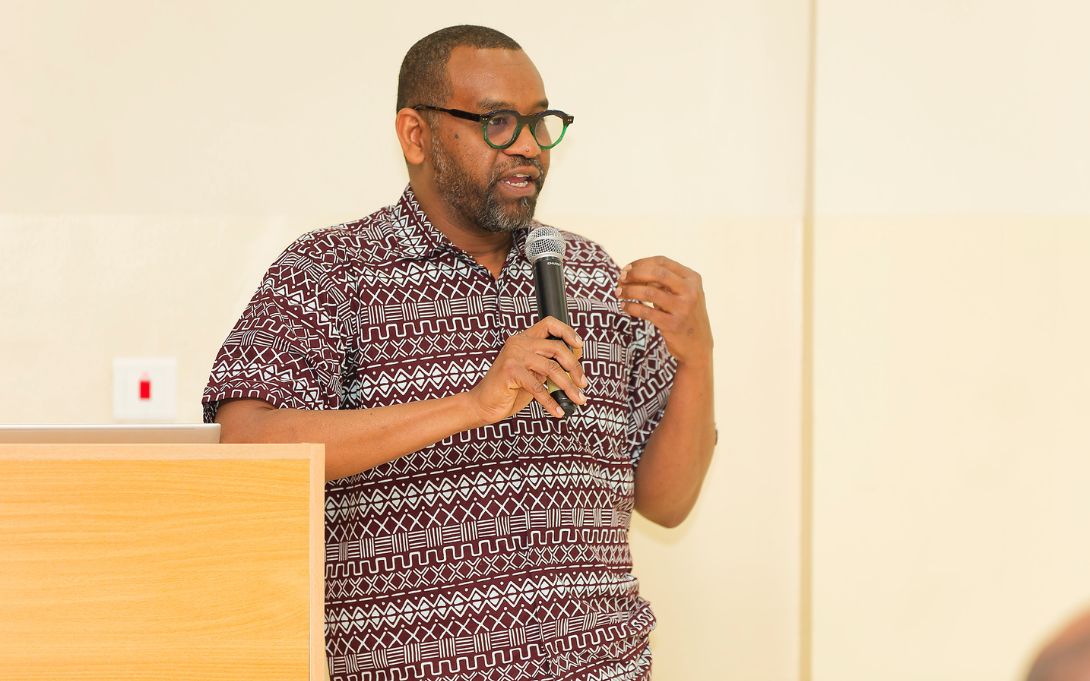
The politics of AI and technology are tied to competing visions of a modern, postcolonial Africa, explained Yousif Hassan, assistant professor at the Gerald R. Ford School of Public Policy. Building on his long-term research on technology and decolonialization, Hassan’s summer fieldwork examined the politics of AI and international development in Africa, with a focus on local agency, imagination, and innovation.
This research forms part of Hassan’s current book project which, importantly, intends to elevate African voices that have been historically sidelined in technological development.
“As countries in Africa gained independence, efforts to modernize were influenced by structural adjustment programs from transnational organizations like the International Monetary Fund (IMF) and the World Bank,” said Hassan.
I’m interested in how Africans are thinking about building the modern African state … and in this moment of AI hype, I am asking who gets to shape it and how?”
During summer 2025, Hassan traveled to Kenya, Ghana, and South Africa to meet with local non-profits, researchers, activists, and entrepreneurs to talk about how they are developing AI technologies tailored to specific domains and cultural contexts. Many promising AI initiatives rely on short-term donor funding, and national governments have yet to fully articulate practical long-term strategies, Hassan explained.

Hassan observed not only how Africans are building new technologies, but how they have repurposed and localized existing ones. He points to Kenya’s leadership in mobile money, and the South African researchers working to improve translations for local languages as examples of indigenous innovation driven by local needs.
“South Africa has a long history of developing language technologies, even before the recent advances in machine learning and Large Language Models (LLMs). Post-apartheid government recognizes nine Indigenous languages beside English and Afrikaans, which means all federal communication has to go out in all those official languages,” said Hassan. “If we are to have AI really serve the public good in Africa, we need to reimagine what development looks like in a way that does not increase global inequalities and exploit the local resources and populations.”
More news from the Ford School